

 English - EN
  繁體 - ZH-TW
  简体 - ZH-CN
  Español - ES
  日本語 - JA
  العربية - AR
  Русский - RU
  Français - FR

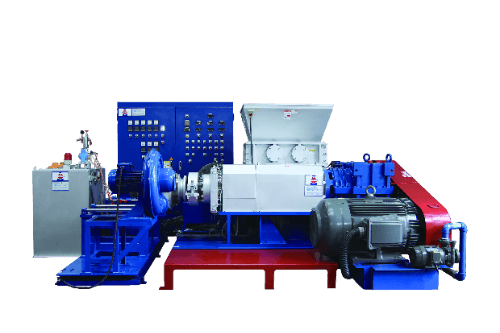
Twin (Arm) Taper Screw Extruder (Pelletizer) (2TE & PFR-Series)
产品分类 : 橡胶挤出生产线
The unique "Y-shaped" twin-conical screw design is suitable for use as an auxiliary equipment for Kneader and Banbury machines. The rubber material discharged after mixing can be directly fed into the twin-screw extruder for automatic extrusion, filtration, or pelletization into various desired shapes, accommodating continuous production operations. The trough and pipe can be optionally designed with a "move out" design, making it easy to clean the internal cavity and convenient for material changes or color changes, effectively preventing cross-contamination of raw materials.

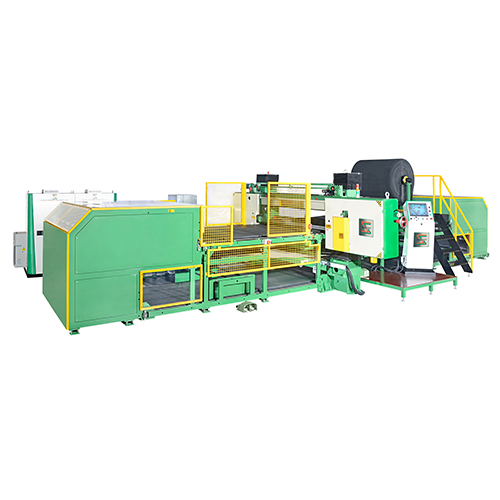

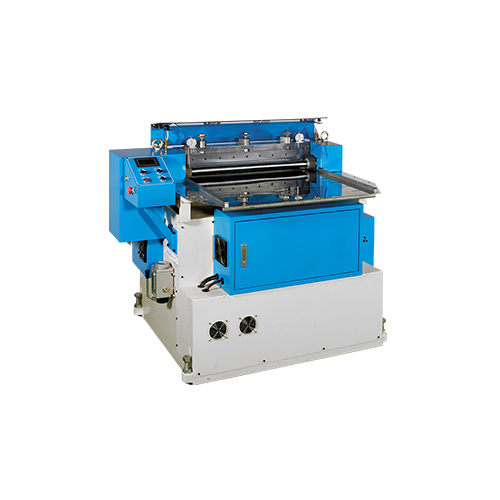


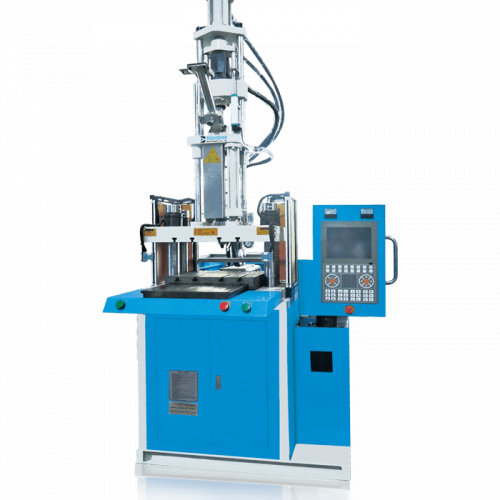
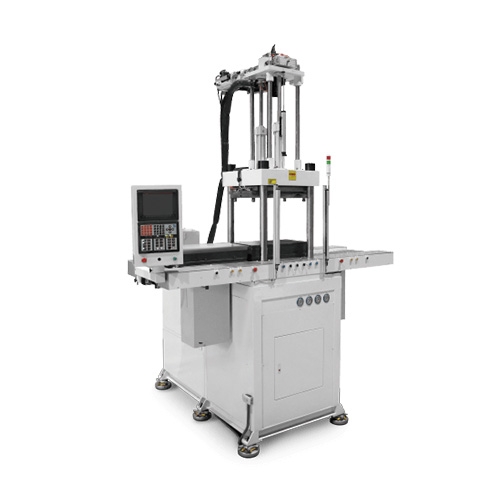
立式塑胶、立式射出成形系列 YHL 系列
产品分类 : 立式注塑机
- 立式直立锁模,直立射出的机体方式,结构简单,宽台面。 - 采射出中心偏位元的设计方式,使三面空间更加开放,能适用长条状汽车密封条接角成型或带有导线产品成型,让成型作业更加容易。 - 立式塑胶射出机,射出系统采标准、模组化设计,通用各类型的嵌件注塑成型,塑胶成型能力特优。 - 立式橡胶射出机,射出系统采螺杆进料,柱塞射出二阶段的设计,能适应不同硬度的橡胶材料,橡胶注射稳定精确。 - 最优化的设计方案,如锁模/注射/塑化等单元最可靠的射出成型设备之一。

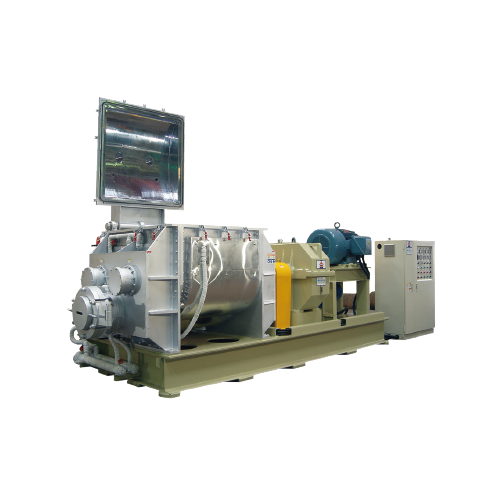
Kneader Ruder (DAKE-Series)
产品分类 : 分散捏合机
The Open Kneader With Ruder Is Available With a「Variety Of Blades In Different Shape Design As Well As With Number Of Discharge Methods And Mixing Conditions」, Has Already Achieved Applications Considerable Various Of Industries That Deal With Such High And Medium-Viscosity Materials As Adhesives, Hot-Melt Material、Silicon Rubber、BMC、Ceramics、Fiberglass、Magnetic Compounds、Printing Inks、Tapes、Thermosetting Resins、Food、Cosmetics、Pharmacy Etc.
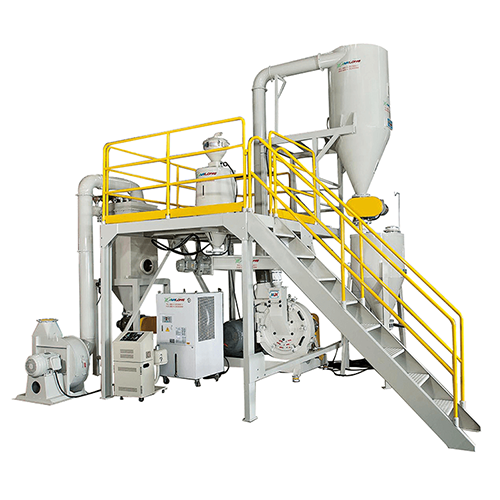
特殊客制化磨粉机系列
产品分类 : 破碎、粉碎和造粒设备
Suitble materials: HDPE, LDPE, flexible/rigid PVC, polypropylene, polystyrene, polyamide, polyester, copolymers, fluoropolymers and synthetic rubber etc. Pulverized Range: 0.1mm to 2mm quality powder for best flow with a specially designed disc mill.


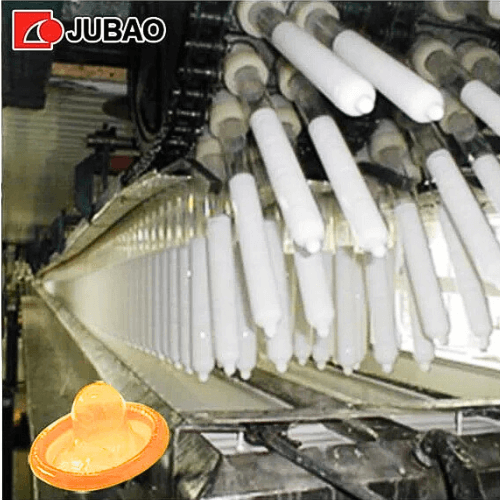
JB-CD Latex Condom Dipping Machine
产品分类 : 橡胶浸渍机
Condom manufacturing machine process Collecting the raw materials Rubber latex is obtained from the milky fluid produced by various tropical plants. Latex is actually an emulsion or dispersion of tiny rubber particles in water, and ingredients added to the latex must be able to attach to the rubber particles during compounding. Compounding Next, chemical additives are mixed to form a paste. This paste is then blended with the liquid latex in a process called compounding. Storage The latex and chemical compound is then unloaded into drums for storage, where it remains for approximately seven days. During this period, vulcanization chemically strengthens the bonds of the rubber. The storage time also allows any air, which might have been trapped in the mixture during compounding, to escape. Dipping The compound is then added to the dipping or condom-forming machine. The dipping machine is a long, hooded machine approximately 100 feet (30.5 m) in length. Thick tempered glass rods move along a closed belt between two circular gears. The belt drags the rods, which are called mandrels, through a series of dips into the latex compound. The mandrels rotate to spread the latex evenly. Several coats are required to build the condom to its required thickness. Between each dip, the latex is hot air dried. After the final dipping and drying, the condoms automatically roll off the mandrels. A machine shapes and trims the ring of latex at the base of each condom. Tumbling Next, the condoms are put in a tumbling machine, where they are coated with talc or another similar powder to prevent the rubber from sticking to itself. Testing After a curing period of several days, the condoms are sampled by batch and tested for leaks and strength. The first such test is the inflation test, in which the condom is filled with air until it bursts. Condoms are required to stretch beyond 1.5 cubic feet, about the size of a watermelon, before bursting. This test is considered most important because the elasticity of the condom keeps it from tearing during inter-course. In the water-leakage test, the condom is filled with 10 ounces (300 ml) of water and inspected for pin-sized holes by rolling it along blotter paper. Condoms are also tested electronically. This involves mounting each condom on a charged stainless steel mandrel. The mandrel is passed over by a soft, conductive brush. If pin holes are present, a circuit will be established with the mandrel, and the machine will automatically reject the condom. Packaging Condoms that have successfully passed these tests are rolled by a machine. Rolling the condom makes it easier to package and use. Lubricant and spermicide may be applied by a metering pump just before the top wrap is added in the foiling process.