English - EN
 繁體 - ZH-TW
 简体 - ZH-CN
 Español - ES
 日本語 - JA
 العربية - AR
 Русский - RU
 Français - FR

400 m/min, and It Holds
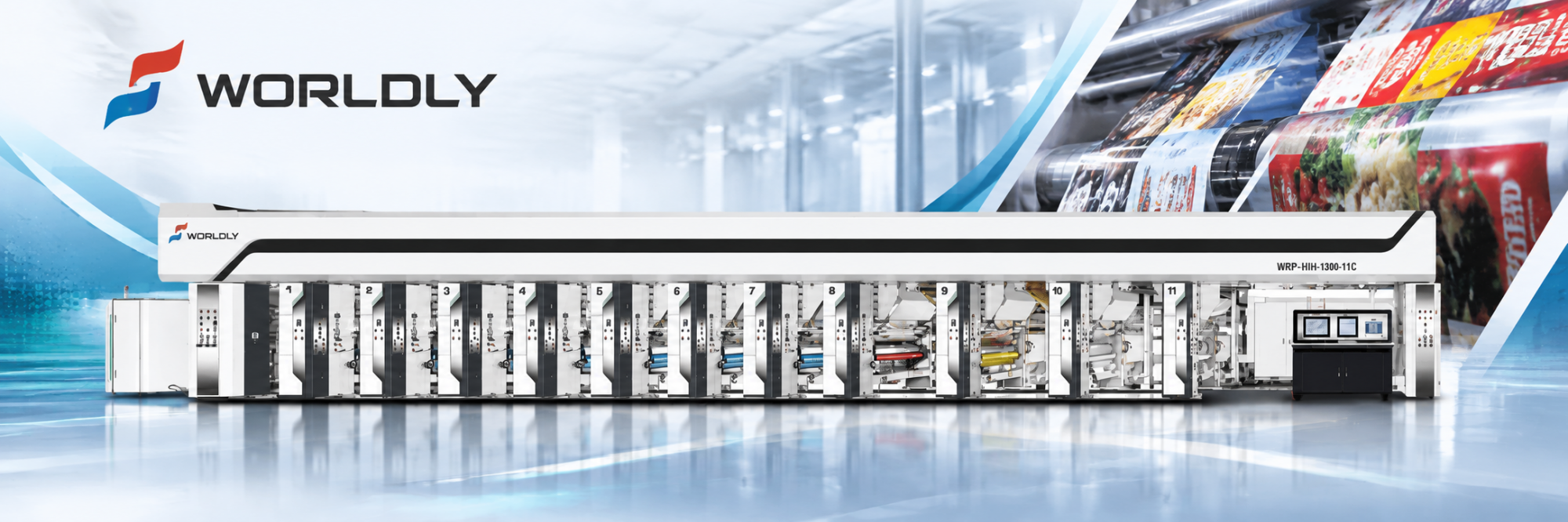
Speed, precision, stability and intelligent control | Worldly’s new high-speed rotogravure press
Flexible packaging converters are working against the same set of pressures: more SKUs, shorter runs, tighter delivery windows, and fewer experienced operators to be found on the floor. Output has to rise and quality has to hold, and results can no longer ride on the feel of a handful of veterans.
Worldly Industrial’s new rotogravure press is built for exactly that. It is the upgraded successor to the WRP-HHI and prints at 400 m/min. But speed is just one line on a spec sheet. A press that is genuinely good to work with is one that still turns out the same standard after a shift change, a change of operator and dozens of job changes.
Independent drives: the foundation for high speed
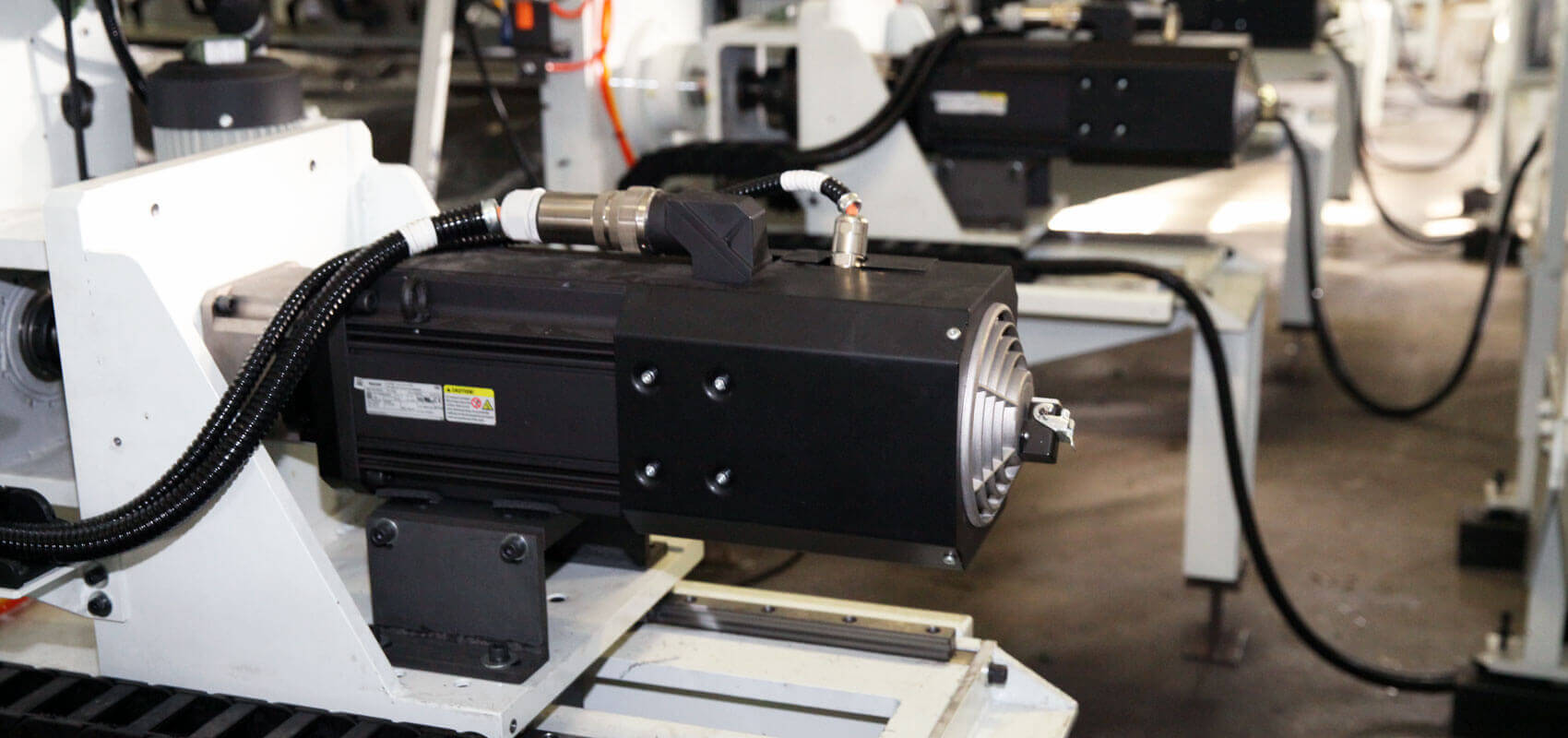
The foundation is an ELS (Electronic Line Shaft) system from Germany’s Bosch Rexroth: each print unit is directly driven by its own independent motor, replacing belt and central mechanical line-shaft transmission. With the power sources separated, the error and wear that come from a shared driveline are no longer there. Independent motors also bring something more practical: fast response. The press gets back to a stable state sooner through acceleration, deceleration, start-up and changeover.
The control system can store the machine parameters for every job and upload them to the cloud over a network connection. When a repeat order comes back, its existing settings are simply recalled, which saves re-trialling time and stops setup results from varying with the operator.
Hold the tension and the roll comes off right
Independently driven units allow tension to be managed zone by zone, and the last place it is judged is at rewind. Tension that runs slack lets the web slip; tension that runs tight deforms the whole roll. Both leave the defects around the core that converters know well. A finished roll with even edges and consistent tightness directly determines how well the next operation runs, whether that is lamination, slitting or bag making. Roll quality is ultimately set by rewind settings together with substrate conditions, and stable zone tension is what lets those settings hold.
Register: once the press can see clearly, nobody has to keep watching
Register stability is the classic high-speed gravure challenge, and automatic register only works if the sensor can actually see the mark. Low-contrast marks, and matt inks containing matting agents, are exactly where detection is most likely to fail.
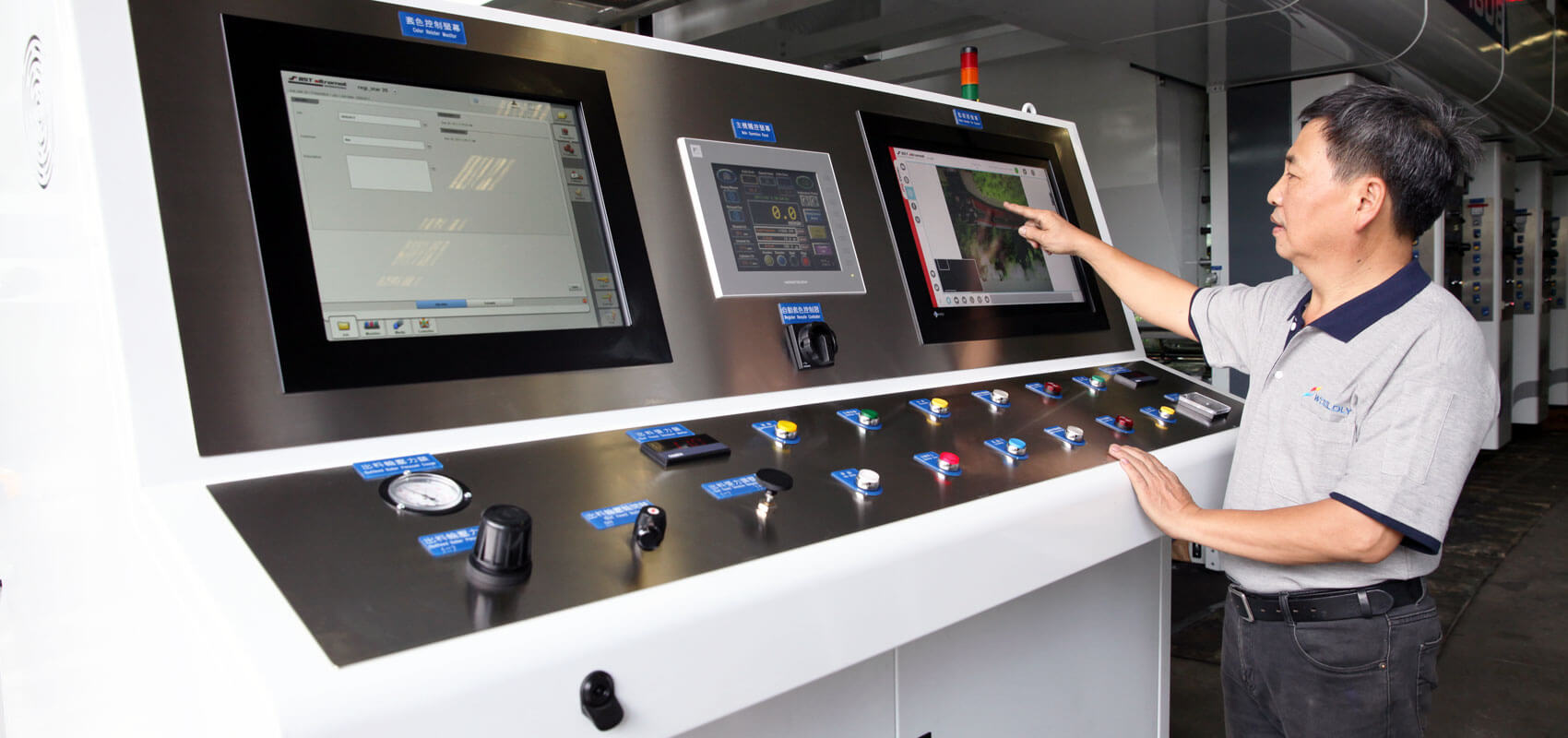
The new press runs a BST eltromat regi_star 20 automatic register system with the RSH fibre-optic sensor, which the manufacturer specifies for low-contrast and matt register marks. Actual detection performance on any given job still needs to be confirmed against mark design and substrate conditions.
On the production floor, the value is not an accuracy figure. It is three concrete things: getting to register faster at start-up, less start-up waste, and fewer manual interventions once the press is running. For a plant handling many jobs, those three add up to extra productive time every day.
Intelligent ink circulation: three jobs, one system
Ink drifts in three directions at once through a run: concentration, temperature and cleanliness. The new press integrates automatic concentration control, ink cooling and magnetic filtration into one ink circulation system, so all three variables are managed on the same loop.
Concentration and ink temperature both drift through a run, viscosity moves with them, and ink transfer and colour change as a result. Automatic concentration control with cooling keeps both variables under continuous system control, rather than relying on someone to measure and top up on a schedule.
The third is cleanliness. When iron debris and other magnetisable metal particles get between the doctor blade and the cylinder, they scratch the cylinder surface and wear both the blade and the cylinder. Magnetic filtration stops them in the circulation loop first.
With all three in one system, ink management moves from “a veteran checks it on a schedule” to “the system controls it continuously”. For plants where staffing keeps getting tighter, that counts for more than a few dozen extra metres.
Sleeve impression rollers: space saved first, time saved second
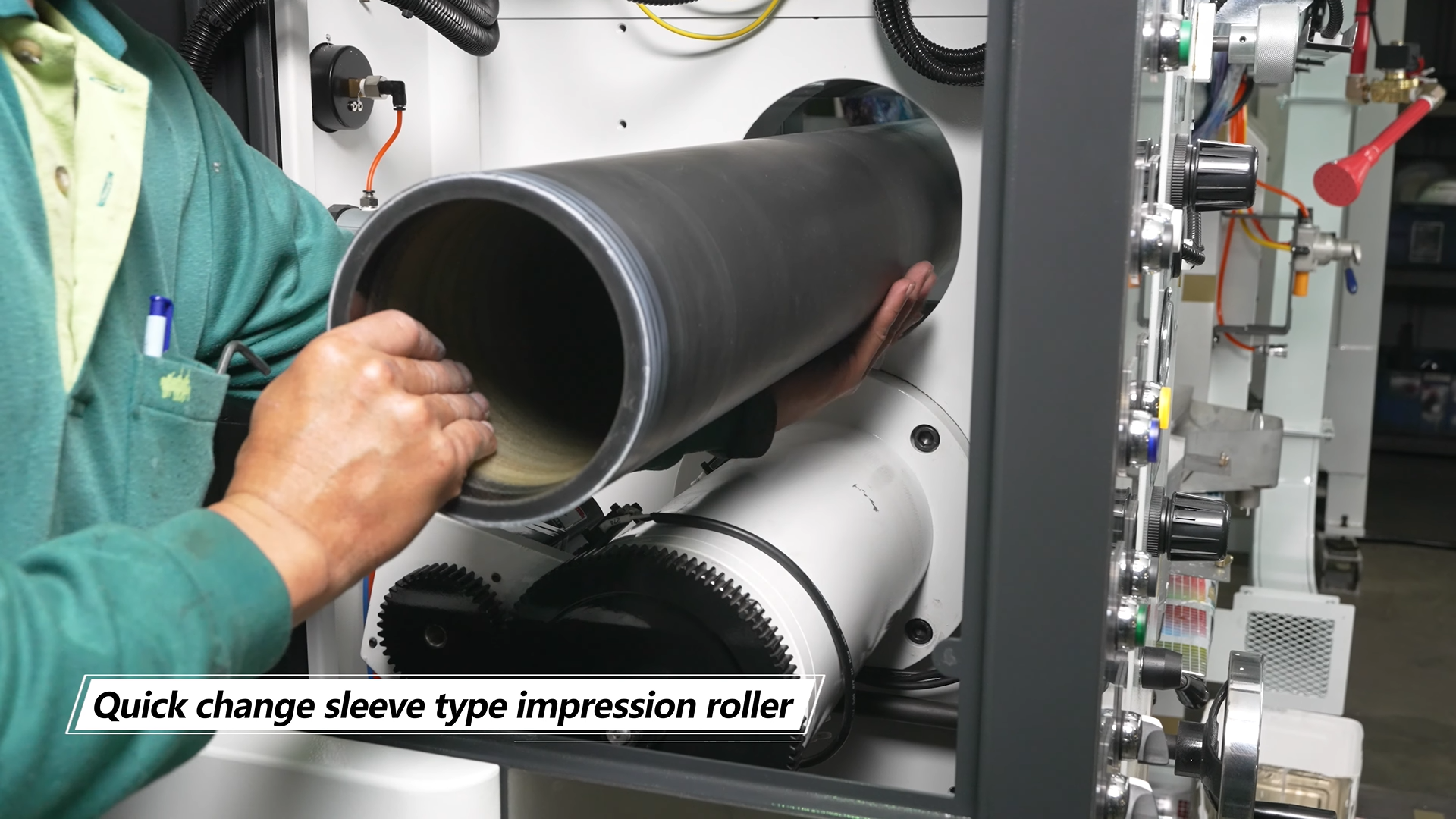
The impression rollers use a sleeve design from Italy’s Rossini, fitted onto and removed from the mandrel with compressed-air assistance, so a size change keeps the mandrel and swaps only the sleeve. Spares go from a whole row of steel-shaft rollers to a set of sleeves on a dedicated rack, and the storage space freed up is something the floor notices.
Faster changes come second. Unlike the complete steel-shaft rollers of the past, a sleeve is far lighter, so handling, fitting and removal are all much easier. For high-mix, short-run lines changing over several times a day, the time saved each time adds directly to that day’s productive output.
A pivoting doctor blade holder: short repeats to 1,200 mm, one mechanism
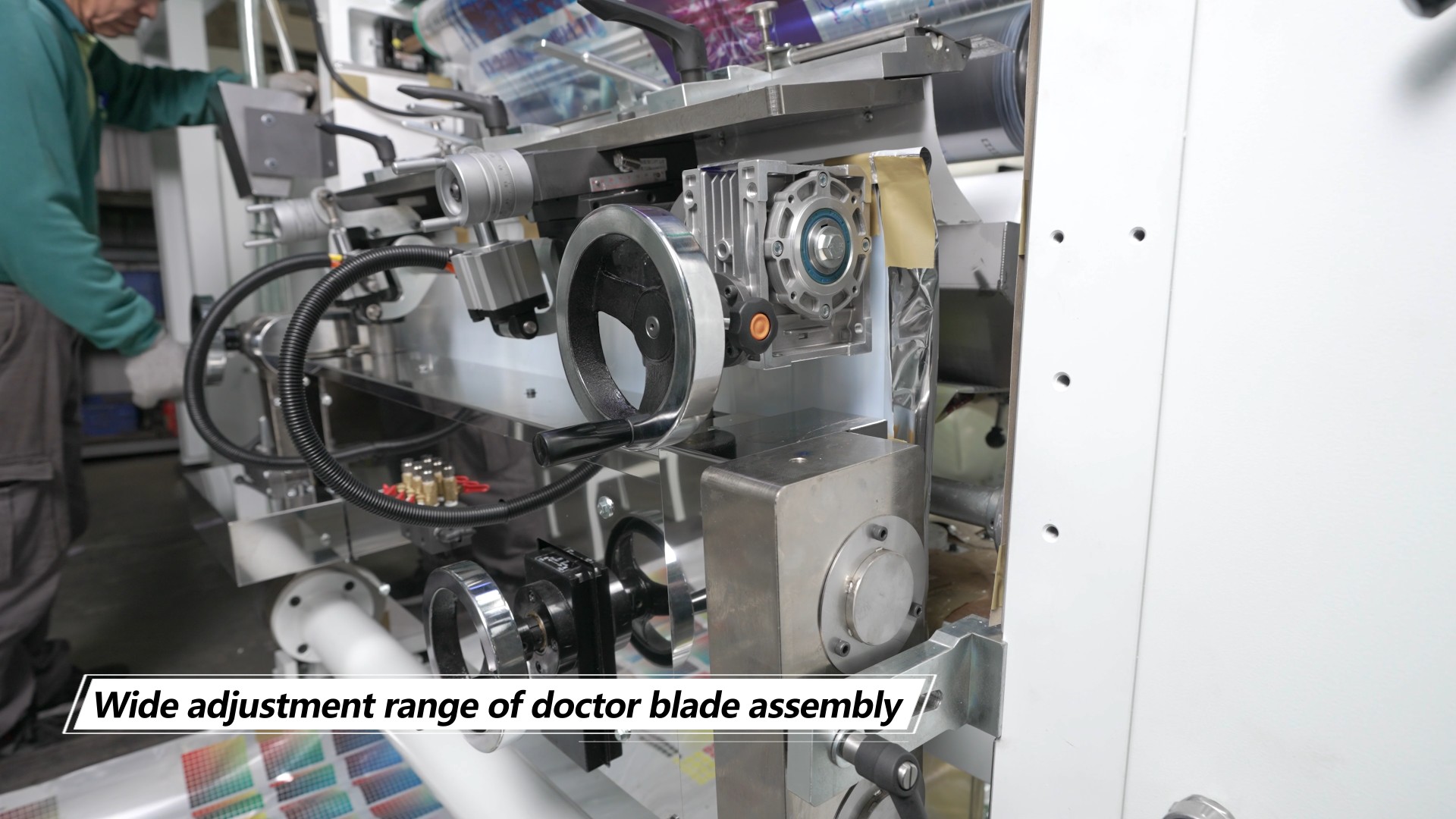
A press that takes on different work has to accept different cylinder sizes, and each size puts the doctor blade at a different contact point and angle. The conventional approach is to swap the entire doctor blade mechanism to suit; every swap means a stop and a re-set, time lost and utilisation down.
The new press uses a doctor blade holder that pivots as a complete unit, adjusting blade position and contact angle to the cylinder size to cover the full specification range.
High-efficiency dryer: printing fast means drying fast
Once speed reaches 400 m/min, what decides how fast a press actually runs is often not the print units but the dryer; if drying capacity cannot keep up, the speed has to come down. The dryer on the new press has been redesigned around airflow, hot-air circulation and drying efficiency, aiming to remove more solvent in less time so that high speed is not held back at the drying end, while reducing residual-solvent risk. Actual results still depend on the ink system, solvent blend, substrate and ink laydown, and need verification case by case.
Heat in the dryer exhaust is recovered and reused through a heat pump heat recovery system instead of being vented, bringing energy use and carbon emissions down even as drying capacity goes up. The dryer section also carries flammable solvent vapour concentration (LEL) monitoring with alarm, plus a separate automatic fire suppression system, as safety protection for a solvent-based process.
What high speed actually means
Whether a press can run at 400 m/min, the spec sheet will tell you, but a spec sheet is only theory. Whether it can really operate at 400 m/min depends on how well the drive, tension, register, ink, changeover and drying each hold up. Worldly designed this new press in exactly that order, building up from the independent drive so the whole chain keeps pace with that speed.
Different substrates, print widths, colour counts and ink systems lead to different machine configurations and parameter recommendations. Share your application conditions and target output, and Worldly will carry out machine evaluation and trial printing planning with you.
More information: www.welead.com






合作媒体