


 English - EN
  繁體 - ZH-TW
  简体 - ZH-CN
  Español - ES
  日本語 - JA
  العربية - AR
  Русский - RU
  Français - FR
From Machine Control to Production Intelligence: Kang Chyau Brings AI into Blown Film Manufacturing
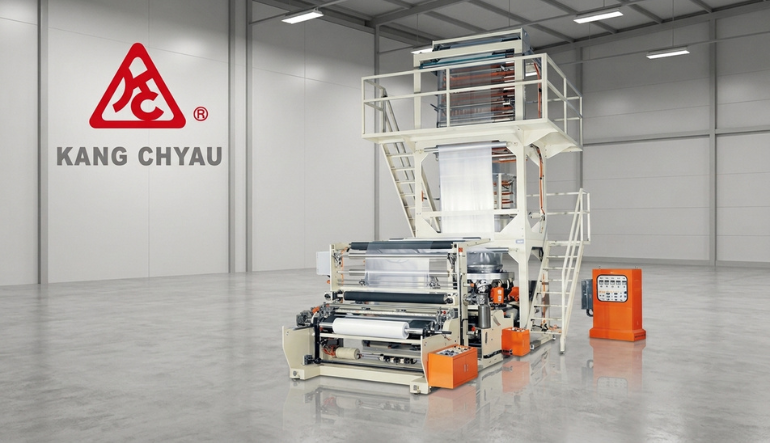
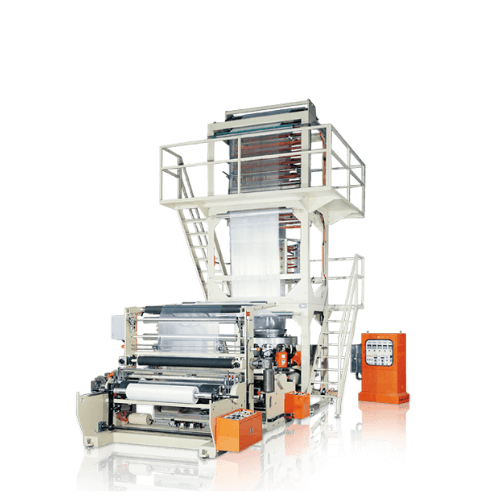
As blown film production moves toward smarter and more connected manufacturing, Taiwan-based Kang Chyau Industry is upgrading its KMT-65 HDPE/LDPE/LLDPE Plastic Inflation Machine with a stronger focus on automation, AI-assisted control and production data integration.
Rather than treating AI as a standalone feature, Kang Chyau is developing the KMT-65 around a more integrated production concept. Connecting material feeding, machine control and factory data within the same operating environment.
Four-Channel Metering Moves Toward Smarter Control
One of the key developments is the machine’s four-channel metering system.
According to Kang Chyau, the system is designed to coordinate material feeding with operating parameters such as motor speed and production conditions. Compared with simpler single-channel configurations, the four-channel system provides greater flexibility for controlling material inputs while moving more machine functions into a centralized control interface.
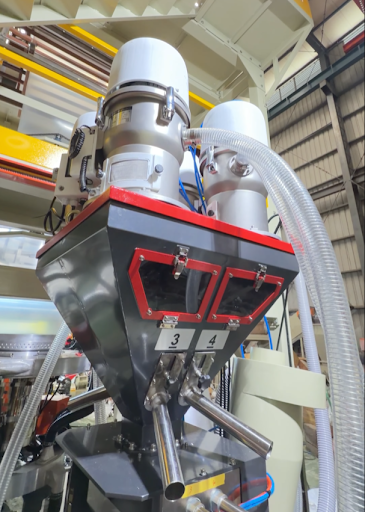
Kang Chyau is also gradually replacing dispersed conventional controls with a more integrated human-machine interface. The goal is to make operating information easier to monitor and allow different production functions to work together through the same control architecture.
This provides the foundation for the company’s next step: incorporating AI into machine operation.
Bringing AI into Blown Film Production
For Kang Chyau, AI integration is focused on practical production functions.
The company is developing AI-assisted control for areas including material feeding and system speed regulation, while bringing more machine parameters into a centralized interface. The aim is to move beyond basic automation toward a system in which production data can support more coordinated machine operation.
This distinction is important.
The KMT-65 is still fundamentally a blown film machine for processing HDPE, LDPE and LLDPE, but the way operators interact with the machine is changing. Instead of managing each process separately, feeding, speed control and production information can increasingly be managed as part of one connected system.
Kang Chyau described this as an ongoing development rather than a finished endpoint, with further AI integration planned for future machine configurations.
Connecting Production Data with ERP
Another major direction is ERP integration.
Kang Chyau is developing a system that can consolidate machine information within the control computer and allow production data to be connected with a customer’s own ERP system.
According to the company, the concept would allow ERP systems to access data generated by the machine, including production output information.
This creates a more connected production flow:
Material feeding → machine control → production data → ERP
For manufacturers, this type of integration can help bridge the gap between equipment on the factory floor and higher-level production management systems.
It also reflects a broader change in plastics machinery: machines are increasingly expected not only to manufacture products, but also to provide usable production data.
Balancing Smart Technology with Cost and Customization
Kang Chyau is also conscious that smarter machinery must remain commercially practical.
During its discussion with PRM Team, the company emphasized the importance of combining higher-level functionality with cost competitiveness and customization. Rather than simply adding more expensive hardware, Kang Chyau aims to integrate more functions through the machine’s control system while adapting configurations to individual customer requirements.
This approach is particularly relevant as manufacturers consider how far they need to digitalize their production without overcomplicating existing operations.
There is also a smaller generational factor behind this shift. Kang Chyau noted that many Taiwanese manufacturers are entering periods of second-generation succession, and younger managers often expect more digitalized and technology-driven production environments.
For Kang Chyau, however, the main focus remains the machine.
The evolution of the KMT-65 shows how conventional blown film equipment can gradually become a more connected production asset: combining material control, centralized operation, AI-assisted functions and ERP connectivity within the same manufacturing ecosystem.
The result is not simply a more automated blown film machine, but a step toward smarter and more data-driven film production.



合作媒体