

 English - EN
  繁體 - ZH-TW
  简体 - ZH-CN
  Español - ES
  日本語 - JA
  العربية - AR
  Русский - RU
  Français - FR
India Tightens Entry for Foreign Plastic Machinery with Anti-Dumping Duties and Certification Barriers
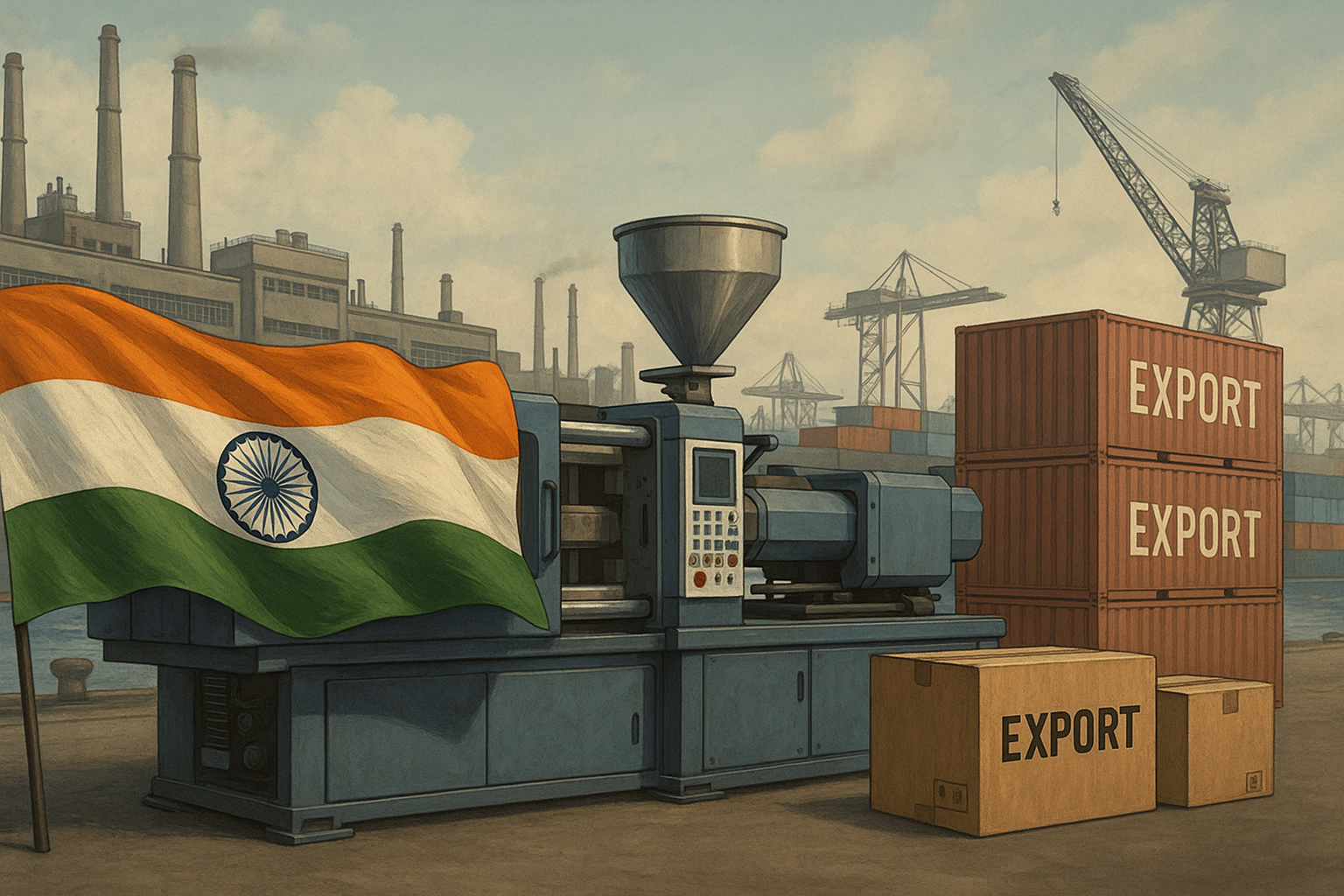
India is ramping up trade defense measures in the plastics machinery sector. On June 26, 2025, the Indian Department of Revenue officially imposed anti-dumping duties ranging from 27% to 63% on plastic processing machinery imported from China and Taiwan, following the final recommendations of the Directorate General of Trade Remedies (DGTR).
These duties apply to machines categorized under tariff codes 8477 10 00 and 8477 90 00, which primarily include injection moulding machines and associated plastic manufacturing equipment. The decision comes after an extensive DGTR investigation concluded that such imports were being sold at unfairly low prices, causing material injury to India’s domestic manufacturing industry.
The DGTR’s final report, dated March 27, 2025, established three key findings:
1. Plastic machinery from China and Taiwan was indeed dumped into the Indian market at artificially low prices.
2. The Indian plastic machinery sector suffered substantial economic damage.
3. The injury was a direct result of the dumped imports.
This anti-dumping duty is calculated based on the CIF (Cost, Insurance, and Freight) value of the imported goods, aiming to level the playing field for domestic manufacturers and curb trade imbalances.
Navigating India’s Regulatory Landscape: BIS Certification Now More Critical Than Ever
While the new duties present a significant financial hurdle, they are not the only challenge for foreign machinery makers. BIS (Bureau of Indian Standards) certification has emerged as another key regulatory gatekeeper for plastic machinery entering the Indian market.
BIS certification is mandatory for many categories of machinery, ensuring that imported products meet Indian safety, quality, and performance standards. Without BIS compliance, even duty-cleared machines may face customs delays, rejections, or restrictions in usage—particularly in regulated sectors such as automotive, healthcare, and packaging.
Manufacturers looking to access India’s growing plastics industry must be prepared to navigate the BIS approval process, which includes:
-
Product testing at BIS-recognized labs
-
Submission of technical documentation
-
Factory audits (for certain product categories)
-
Periodic surveillance and renewal procedures
Implications for Exporters from China and Taiwan
For plastic machinery suppliers from China and Taiwan, the combined impact of high anti-dumping tariffs and BIS regulatory compliance marks a significant shift in India’s trade policy landscape. The dual-layered protectionist approach is seen as a move to boost local manufacturing capacity and promote self-reliance under the "Make in India" initiative.
Companies still eyeing India as a strategic market must now reassess their pricing strategies, local partnerships, and certification readiness to remain competitive.
Exhibitions Related Articles
- 孟加拉展覽
- 中國塑橡膠展
- 杜拜塑橡膠展
- 德國塑橡膠展
- 印度塑橡膠展
- 印尼塑橡膠展
- 伊朗塑橡膠展
- 日本塑橡膠展
- 墨西哥塑橡膠展
- 波蘭塑橡膠展
- 俄羅斯國際塑橡膠展
- 台北塑橡膠展
- 泰國塑橡膠展
- 土耳其塑橡膠展
- 阿拉伯塑橡膠展
- 美國塑橡膠展
- 越南塑橡膠展
- 台北國際包裝工業展
- SAUDI PPPP
- interpack Düsseldorf
- PRS Europe
- Hanoi Plas
- FIP
- Plast Milan
- AMI Compounding & Recycling Expo
- EXPOPLAST PERU 2026
- interpack China (SWOP)
- Indo Waste & Recycling
- CambodiaPlasPrintPack
- ProPak China
- ColombiaPlast
- Energy Taiwan & Net-Zero Taiwan
- Sino-Pack
押出机与押出整厂设备
- Agricultural Membrane Making Machine
- 气泡垫生产设备
- 气泡布挤押出生产线
- 气泡布共挤押出生产线
- 制袋设备
- 吹膜机
- 吹膜机
- 吹膜机
- 流延膜押出机
- 流延膜机
- 涂胶机
- EPS/EPE 发泡板押出
- 押出机
- 贴合机
- Extrusion Lines For Filaments and Yarn
- Extrusion Lines For Pipes and Profiles
- 单丝押出机
- 单丝押出机
- PET Strapping Band Extrusion Lines
- 制袋机
- 塑料薄膜共挤
- 塑胶管材制造机
- 塑胶管材制造机
- PVC软管机
- PVC硬管机
- PVC异型押出机
- 板材押出生产线
- 吸管制造机
- 双螺杆押出机
- 双螺杆押出机
- 编织袋机
合作媒体