

 English - EN
  繁體 - ZH-TW
  简体 - ZH-CN
  Español - ES
  日本語 - JA
  العربية - AR
  Русский - RU
  Français - FR
How to Choose the Right Plastic Recycling Machine: Complete Equipment Type Analysis from Shredding to Pelletizing
Plastic waste has emerged as one of the most pressing environmental challenges of our time, with millions of tons generated globally each year. Mechanical recycling remains the most cost-effective and widely adopted solution to convert post-consumer and post-industrial plastic scrap into valuable raw materials. However, the profitability and efficiency of a recycling operation depend entirely on selecting the right equipment tailored to your specific feedstock and production goals.
This comprehensive guide walks you through every stage of the plastic recycling process — from shredding to pelletizing — and helps you choose the right machine for your specific application.
1. The Plastic Recycling Process: A Four-Stage Workflow
Plastic recycling follows a four-stage process, regardless of the type of plastic being processed: Size Reduction → Washing → Dewatering → Pelletizing. Each stage employs specialized equipment.
2. Key Equipment Types by Process Stage
2-1 Size Reduction: Shredders and Granulators
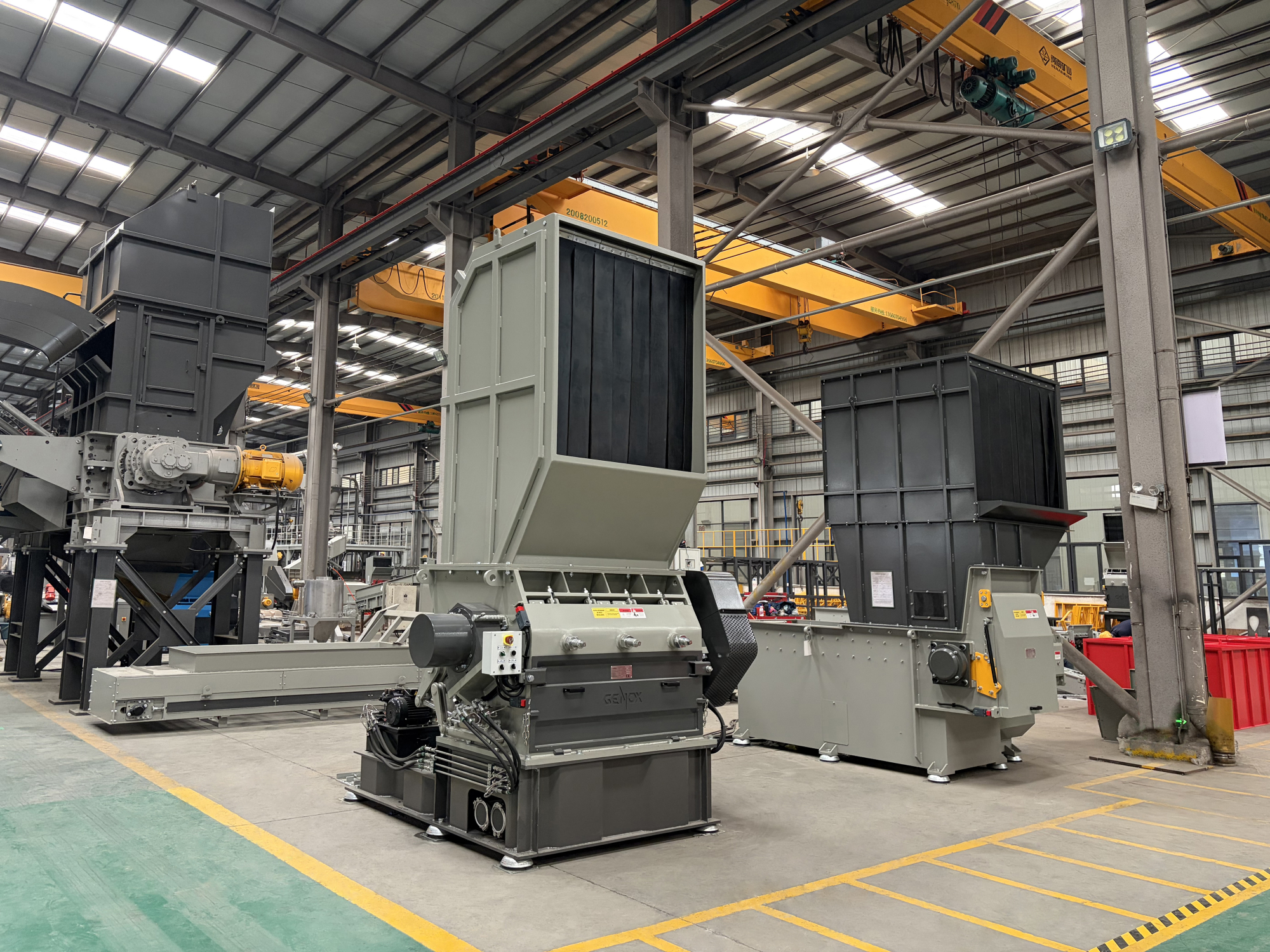
The size reduction stage is the first and most critical step in any recycling operation. It sets the tone for the entire process, as improperly sized material will cause bottlenecks and inefficiencies downstream. Two primary machines are used here: shredders and granulators, each with distinct capabilities and applications.
Plastic Shredders perform primary size reduction, cutting material to 20–80 mm fragments. They use a tearing or shearing action with rotating blades or hammers to reduce volume efficiently.
Plastic Granulators (Crushers) then refine these pieces into uniform 8–12 mm flakes. This stage produces consistent particle sizes suitable for feeding into subsequent washing and pelletizing equipment.
2-2 Washing Systems: Ensuring Purity
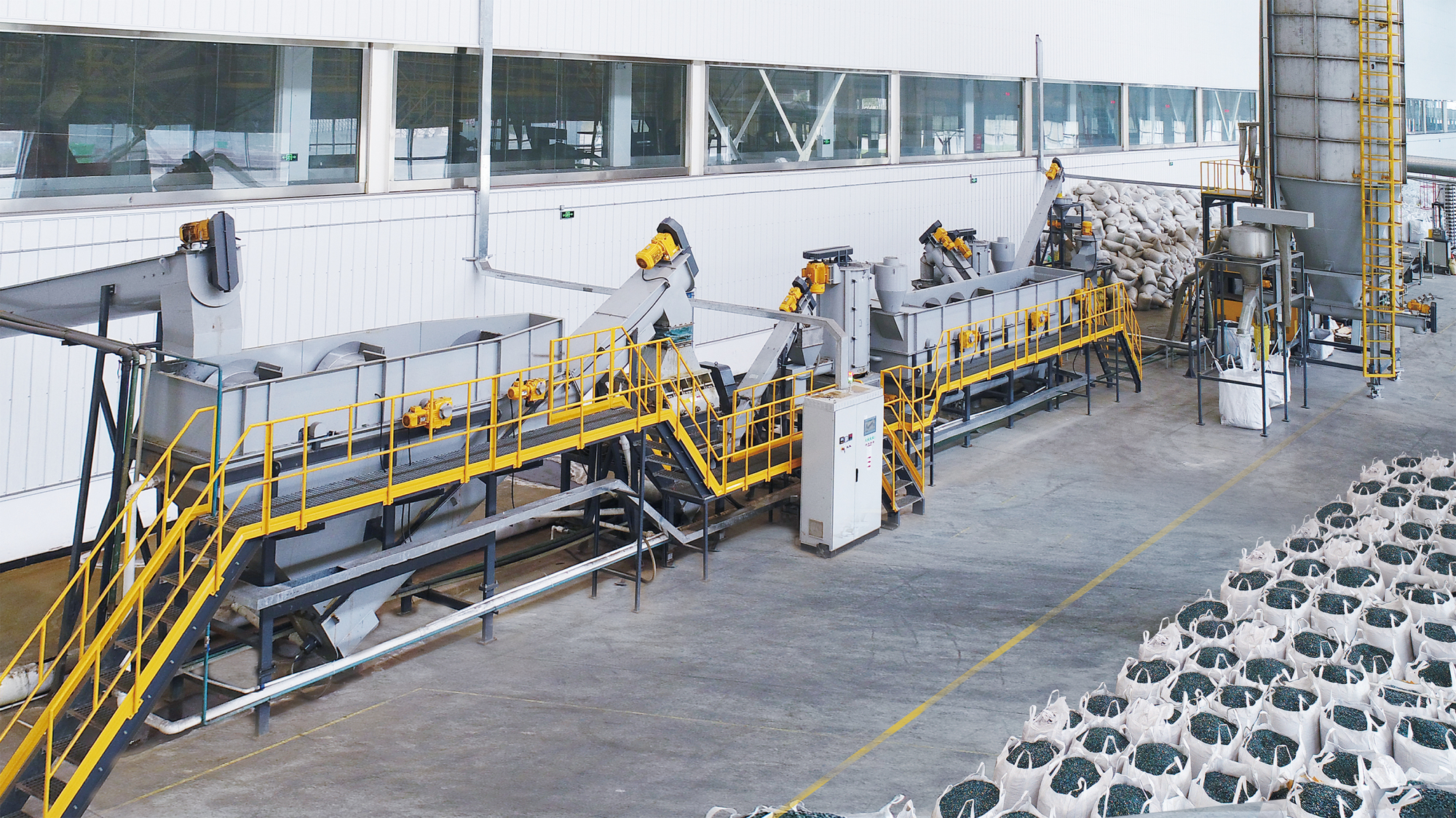
Post-consumer plastic carries contamination — labels, adhesives, food residue, soil, and mixed polymer types. Washing lines remove these contaminants through a multi-stage approach.
Pre-wash float tanks remove heavy contaminants like stones, sand, and metals. Sink-float separation tanks separate plastics by density: PE and PP float while PET and PVC sink. Friction washers use high-speed scrubbing (600–1,500 RPM) to strip labels and surface dirt.
For materials requiring higher purity — such as food-grade PET — hot washers dissolve adhesives and organic contaminants at 80–95°C with NaOH solution.
2-3 Dewatering Equipment: Removing Moisture for Quality Pellets
Even after washing, plastic flakes retain significant amounts of moisture. If not properly removed, this moisture will turn to steam during the melting process, causing bubbles, voids, and degradation in the final pellets. Two primary types of dewatering equipment are commonly used:
Centrifugal Dryers: A high-speed rotor spins the material inside a perforated screen drum, flinging bulk water out by centrifugal force.
Squeeze Dryers: Use mechanical pressure to squeeze water out of low-density materials like films and bags, which are particularly prone to trapping moisture.
The choice between centrifugal and squeeze drying depends on your specific feedstock. For rigid plastics, centrifugal dryers are generally sufficient, while soft films and bags require the additional mechanical force of a squeeze dryer.
2-4 Pelletizing Systems: Creating the Final Product
Pelletizing is the final transformation step: washed and dried plastic flakes are melted, filtered, and formed into uniform pellets — the universal feedstock for new plastic products.
Common Pelletizing Technologies:
Strand Pelletizing: The most widely used method, where molten plastic is extruded into strands, cooled in a water bath, and then cut into pellets.
Underwater Pelletizing: It cuts plastic strands underwater right after extrusion to produce spherical pellets with excellent fluidity.
Cutter Compactor Pelletizing: Ideal for low-density materials such as films and bags, this equipment densifies materials first before feeding them into extruders to avoid bridging and clogging.
3. How to Choose the Right Plastic Recycling Machine for Your Operation
Selecting the right plastic recycling equipment is a critical investment decision that will impact your profitability for years to come. Here are the key factors to consider:
3-1 Assess Your Material Type
The physical form and condition of your waste dictate every downstream equipment decision. For example, rigid plastics (pipes, drums, crates, bottles), flexible plastics (films, woven bags), mixed post-consumer waste, etc.
Besides, confirm whether the machine supports the specific resin types you plan to process—common ones include PET, HDPE, LDPE, PP, and PS.
3-2 Determine Throughput and Capacity
Capacity is typically rated in kilograms per hour (kg/h). Be realistic: undersized machines limit growth and cause bottlenecks; oversized machines waste capital and floor space. A good guideline is to select equipment that handles your current peak volume with a 20–30% margin for future expansion.
3-3 Consider the Quality of the Final Product
The quality requirements of your target market will dictate the level of sophistication needed in your washing, separation, and pelletizing equipment. For high-end applications such as food contact materials, you will need advanced sorting technologies and multi-stage washing systems to achieve the necessary purity levels. We recommend GENOX's 3T/h Food-grade HDPE Washing Line, which has received FDA No Objection Letter.
3-4 Evaluate Equipment Reliability and After-Sales Support
The machine is only half the solution. A reliable supplier provides:
· Testing facilities for your specific materials before purchase
· Professional installation and operator training
· Responsive after-sales support and spare parts availability
· Engineering support for line integration and optimization
GENOX maintains a global footprint with proven industry experience, leading R&D capabilities, and customized solutions designed for your specific recycling requirements.
3-5 Factor in Energy Efficiency and Operating Costs
Energy consumption is one of the largest ongoing expenses in a recycling facility. GENOX machines are designed with high-efficiency motors and optimized drive systems to minimize power usage per kilogram of output, reducing your operating costs and improving your bottom line.
Conclusion
Building a successful plastic recycling business requires careful planning and the right equipment. By understanding the four-stage recycling process and selecting machines that are tailored to your specific feedstock, production capacity, and quality requirements, you can create an efficient, profitable operation.
| Step | Specialized Equipment | GENOX Solutions |
| Size Reduction | Shredder → Granulator | YS Series Pre-Shredder, V Series Shredder, GC Series Granulator, etc. |
| Washing | Float/sink tanks, friction washers | HDPE Washing Line (FDA-approved), PE Film Washing Line, etc. |
| Dewatering | Centrifugal dryer, squeeze dryer | Integrated Drying System |
| Pelletizing | Strand/UWP pelletizer | Pelletizing System |
GENOX is your trusted partner in plastic recycling, offering industry-leading shredders and granulators that deliver unmatched performance, durability, and reliability. Whether you are starting a new recycling facility or upgrading an existing one, GENOX has the expertise and solutions to help you succeed.

合作媒体